What is Vastu Shastra?
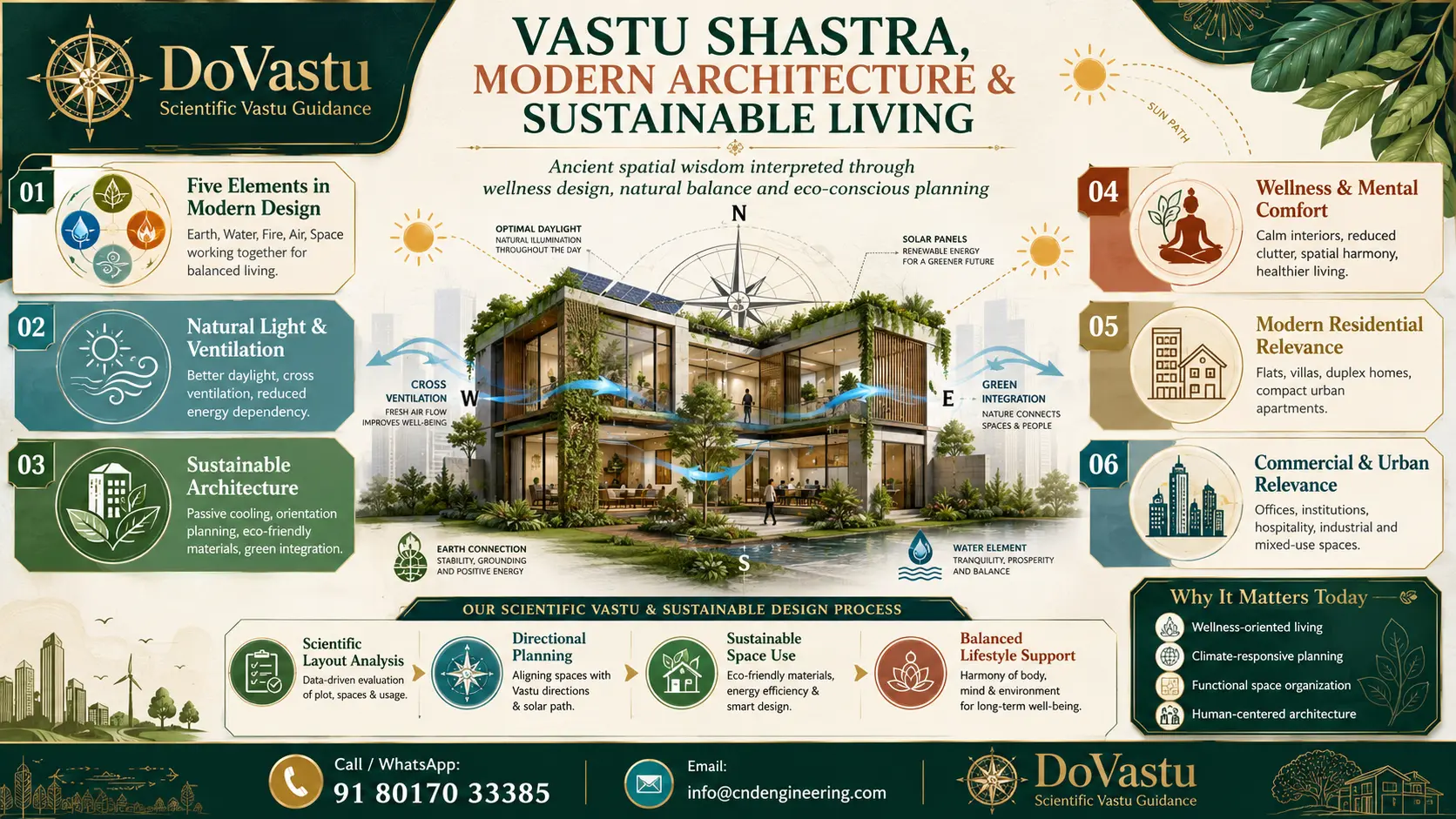
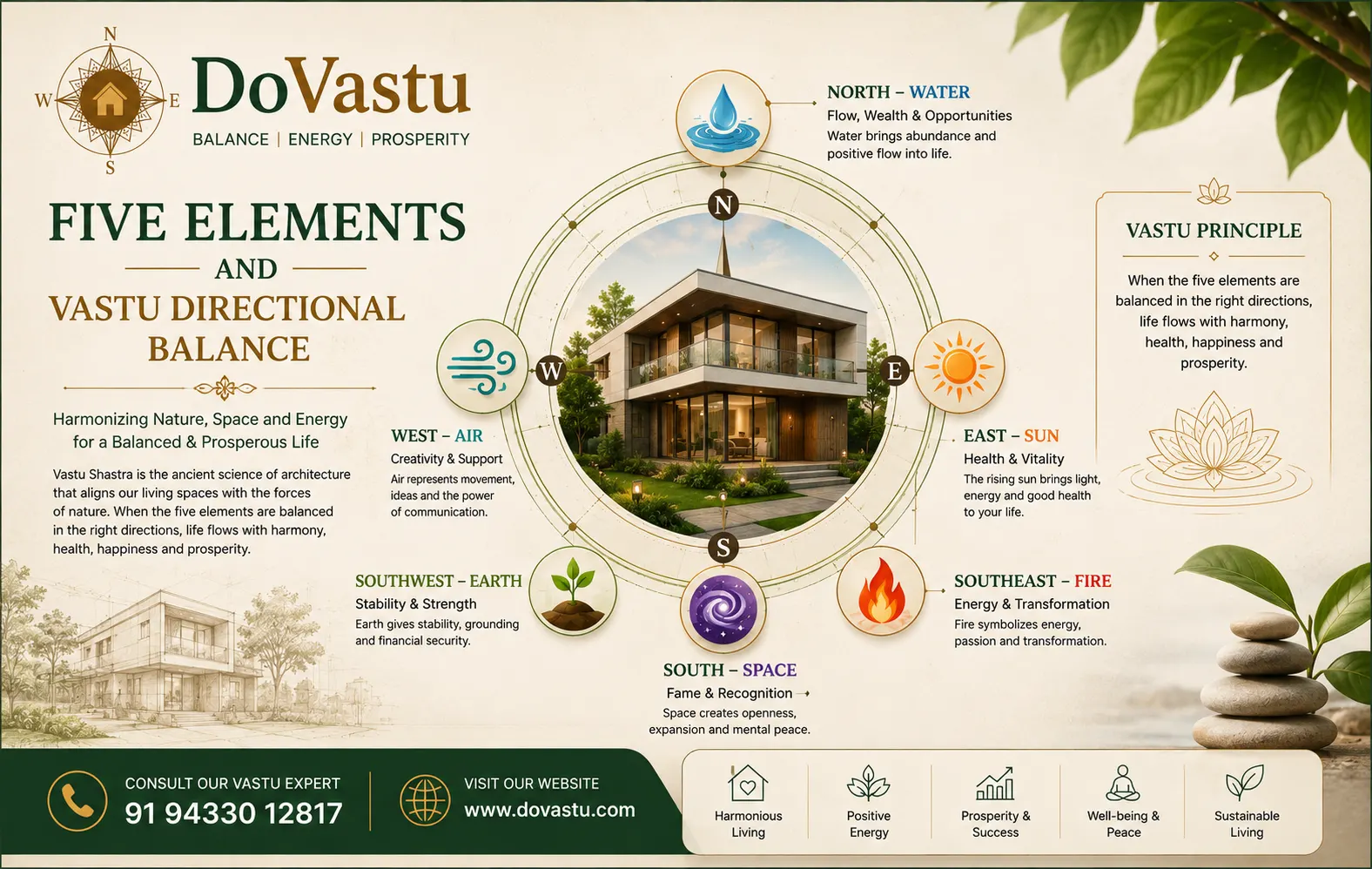
Vastu Shastra, often referred to as the “science of dwelling,” is an ancient Indian architectural system that provides guidelines for planning buildings, cities, temples, homes, offices, and industrial spaces. It focuses on balancing the five natural elements:
- Earth
- Water
- Fire
- Air
- Space
The system also emphasizes directional alignment, sunlight movement, energy flow, ventilation, spatial organization, and proportionate planning. Historically, Vastu principles were used in the design of temples, towns, palaces, and residential structures throughout India.
Unlike the misconception that Vastu is purely superstition, many contemporary scholars interpret it as an early environmental design framework rooted in climatic responsiveness and spatial efficiency.
Why Vastu Shastra is Becoming Important Again
1. Rising Demand for Wellness-Oriented Living
Modern lifestyles have created increasing concerns regarding:
- Mental stress
- Poor indoor environments
- Lack of sunlight
- Inadequate ventilation
- Urban congestion
- Psychological fatigue
As people spend more time indoors, the relationship between architecture and emotional well-being has become critically important. Modern environmental psychology suggests that natural light, airflow, openness, and organized spatial planning significantly affect mental comfort and productivity. Many Vastu principles naturally support these ideas.
Vastu-based planning often encourages:
- Proper sunlight penetration
- Better air circulation
- Reduced spatial congestion
- Balanced room allocation
- Functional zoning
These principles contribute to healthier indoor environments and enhanced psychological comfort.
Vastu Shastra and Sustainable Architecture
One of the strongest reasons for the modern revival of Vastu Shastra is its connection with sustainable architectural practices.
Recent research highlights that traditional Indian structures designed using Vastu concepts often demonstrated:
- Climate adaptability
- Passive cooling
- Natural ventilation
- Thermal comfort
- Daylight optimization
- Reduced dependence on mechanical systems
Several studies now recognize Vastu Shastra as a passive design strategy compatible with sustainable architecture.
Key Sustainable Features of Vastu-Based Design
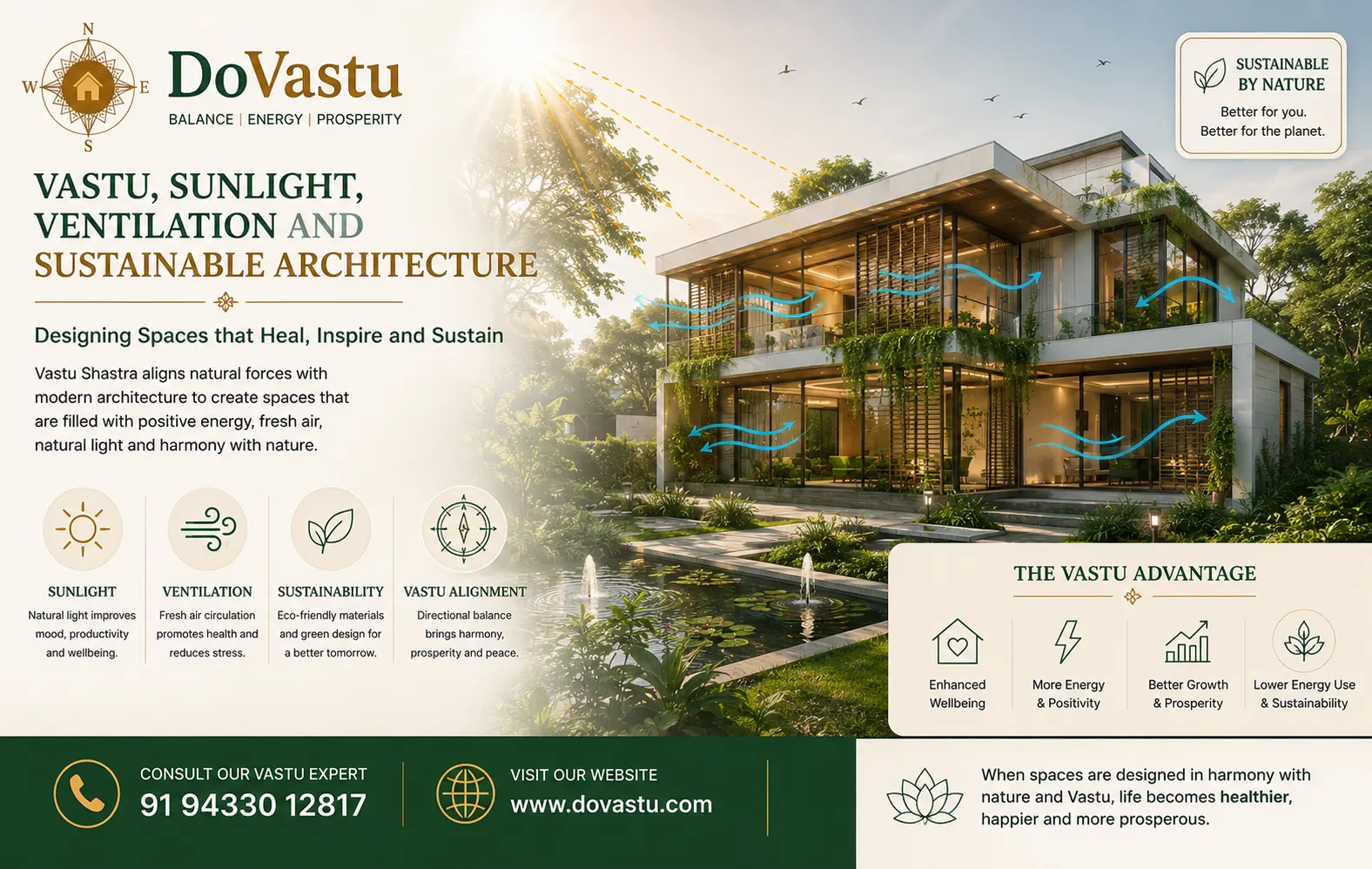
Proper Orientation
Building orientation plays a major role in controlling heat gain, airflow, and daylight distribution. Vastu emphasizes directional planning based on solar movement and environmental exposure.
Natural Ventilation
Traditional Vastu planning often includes cross-ventilation strategies that improve indoor air quality and reduce dependency on artificial cooling.
Daylight Utilization
Vastu encourages planning spaces according to sunlight movement, helping maximize natural illumination throughout the day.
Environmental Harmony
The integration of water bodies, open spaces, greenery, and balanced structural layouts aligns closely with contemporary eco-friendly architecture.
These principles closely resemble many concepts used today in green building design and climate-responsive architecture.
Relevance of Vastu in Modern Residential Design
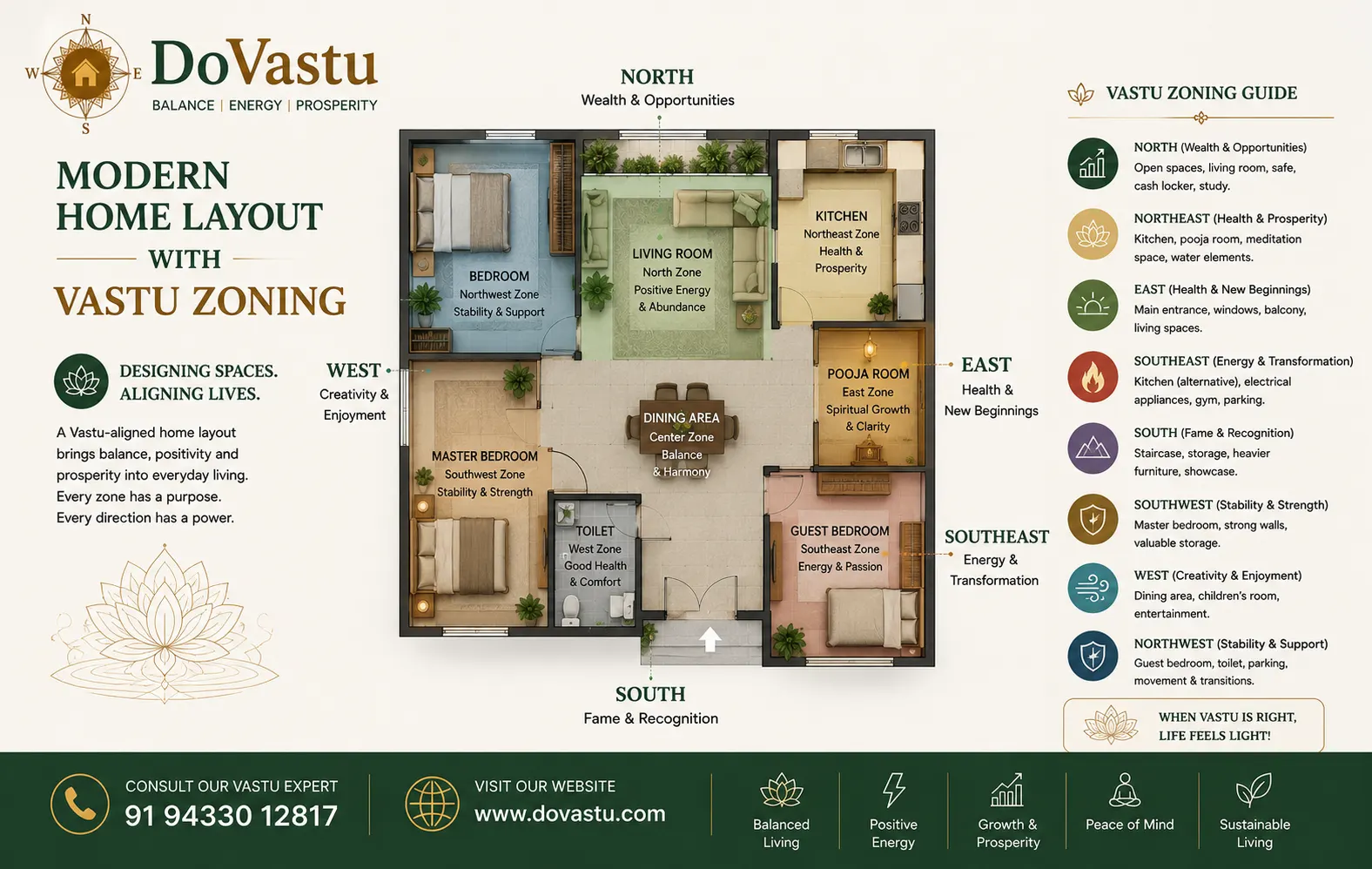
Homeowners increasingly seek homes that feel calm, functional, and emotionally balanced. Modern residential Vastu is no longer restricted to rigid traditional layouts. Instead, architects and consultants now adapt Vastu principles to:
- Apartments
- Villas
- Urban homes
- Compact flats
- Duplex houses
- Contemporary interiors
Modern Vastu applications focus on practical improvements such as:
- Better room placement
- Improved circulation
- Entrance orientation
- Balanced spatial zoning
- Functional kitchen positioning
- Proper bedroom alignment
This approach allows modern homes to integrate traditional wisdom with contemporary architecture without compromising design aesthetics.
Importance of Vastu Shastra in Commercial Spaces
Businesses increasingly recognize the psychological and functional impact of workplace design. Commercial Vastu is now widely applied in:
- Offices
- Retail outlets
- Hotels
- Educational institutions
- Factories
- Warehouses
- Food courts
Modern workplace planning prioritizes:
- Employee productivity
- Customer movement
- Operational efficiency
- Energy optimization
- Workplace wellness
Vastu-based commercial layouts often emphasize:
- Functional zoning
- Clear circulation patterns
- Directional balance
- Reception placement
- Cabin orientation
- Space utilization
Research also indicates that spatial organization influences human behavior, productivity, and comfort levels.

Vastu and Environmental Psychology
One of the strongest modern interpretations of Vastu Shastra comes from environmental psychology — the study of how built environments affect human emotions and behavior.
Many Vastu concepts indirectly support:
- Reduced visual clutter
- Better movement flow
- Spatial openness
- Natural lighting
- Psychological comfort
- Calmness and stability
Modern architecture increasingly recognizes that physical environments significantly influence mental well-being. This has strengthened the relevance of Vastu principles in contemporary design thinking.
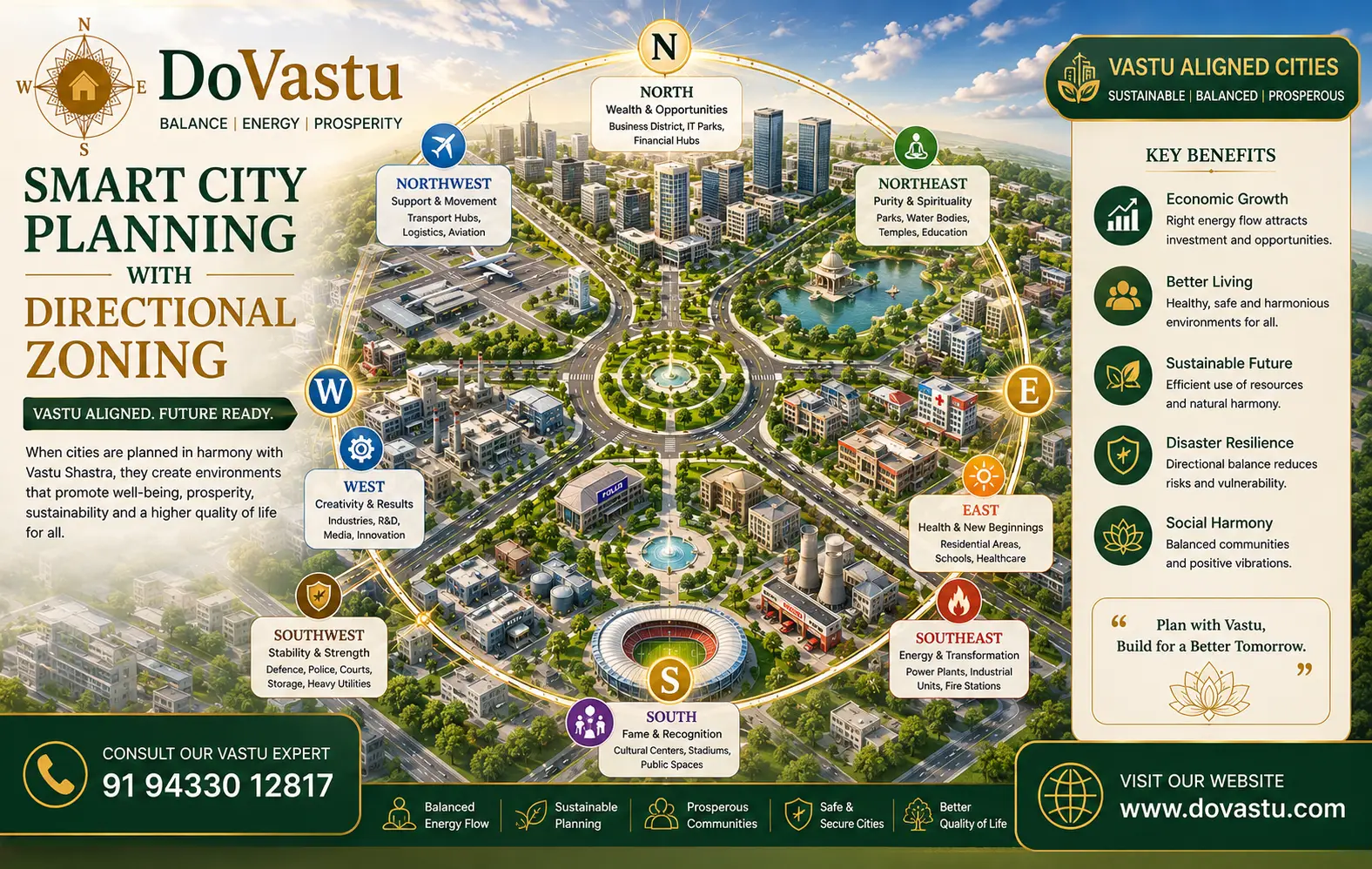
Vastu Shastra and Smart Urban Planning
Modern cities face challenges related to:
- Overcrowding
- Poor ventilation
- Heat islands
- Lack of green integration
- Unsustainable planning
Ancient Indian town-planning systems influenced by Vastu incorporated:
- Water systems
- Open courtyards
- Directional streets
- Balanced zoning
- Natural integration
Several scholars now argue that traditional planning systems contain valuable insights for future sustainable urban development.
The Scientific Debate Around Vastu Shastra
It is important to acknowledge that Vastu Shastra remains a debated subject. Critics argue that certain metaphysical claims lack scientific validation. However, several researchers differentiate between:
- Superstitious interpretations
- Practical architectural principles
Modern academic discussions increasingly focus on the measurable aspects of Vastu, including:
- Climate responsiveness
- Ventilation efficiency
- Sunlight management
- Thermal comfort
- Human psychology
- Environmental harmony
Research papers suggest that while exaggerated claims should be approached critically, many practical Vastu principles align logically with architecture and environmental science.
Vastu Shastra in Contemporary Architecture
Several renowned architects and planners have incorporated Vastu-related principles into modern projects. Historical and modern examples demonstrate that Vastu can coexist with contemporary design innovation.
Today, Vastu is no longer viewed strictly as a rigid traditional formula. Instead, it is increasingly treated as:
- A spatial planning framework
- A wellness-oriented design philosophy
- A sustainability-supporting system
- A culturally rooted architectural methodology
Future of Vastu Shastra in Modern Society
The future relevance of Vastu Shastra lies in its adaptability. As architecture moves toward:
- Sustainable construction
- Human-centered design
- Wellness architecture
- Green building systems
- Passive cooling strategies
- Biophilic design
Vastu principles may continue evolving as complementary design tools rather than rigid doctrines.
Modern users increasingly seek practical Vastu consultation focused on:
- Scientific layout analysis
- Directional planning
- Environmental balance
- Functional improvement
- Minimal structural correction
This practical and research-oriented interpretation is helping Vastu remain relevant in the 21st century.
Vastu Consultation in Kolkata and Online for Modern Properties
DoVastu provides practical Vastu consultation for homes, apartments, offices, shops, hotels, factories, institutions and online clients who want layout-based guidance rather than generic advice. The consultation approach combines direction checking, functional zoning, room-use analysis, natural-light review, ventilation logic and practical correction planning.
For Kolkata and West Bengal clients, this article is especially relevant because many modern properties are compact apartments, mixed-use buildings, commercial interiors or renovation projects where structural changes may be limited. A modern Vastu review therefore focuses on realistic improvements such as room-use correction, entrance treatment, clutter management, directional balance, furniture placement, lighting, colour logic and ventilation support.
Frequently Asked Questions
Is Vastu Shastra relevant for modern apartments?
Yes. Modern Vastu can be applied to apartments by studying entrance direction, room placement, kitchen position, bedroom use, ventilation, light flow and practical correction options without major structural change.
Can Vastu principles support sustainable design?
Many practical Vastu ideas overlap with passive design thinking, including orientation, daylight use, cross ventilation, open-space planning, thermal comfort and climate-responsive layouts.
Does DoVastu provide online Vastu consultation?
Yes. Online consultation can be done through floor plans, property photos, Google Earth direction verification and digital discussion for homes, offices, commercial spaces and industrial properties.
Can Vastu corrections be done without demolition?
In many cases, practical corrections can be suggested through room-use adjustment, furniture placement, decluttering, light and colour treatment, entrance improvement and symbolic or functional remedies.
Conclusion
The significance of Vastu Shastra in modern times extends far beyond traditional beliefs. Its growing relevance is largely connected to increasing awareness regarding sustainable living, environmental harmony, wellness-oriented architecture, and functional space planning.
While certain mystical claims remain scientifically debated, many core Vastu principles align strongly with contemporary concepts such as:
- Climate-responsive architecture
- Passive design
- Environmental psychology
- Sustainable planning
- Human-centered spatial organization
As modern society continues searching for healthier, more balanced, and environmentally responsible living spaces, Vastu Shastra is gradually being reinterpreted as a practical architectural philosophy capable of integrating ancient wisdom with modern design science.
For homeowners, architects, builders, businesses, and urban planners, Vastu Shastra today represents not merely tradition — but a growing dialogue between architecture, sustainability, wellness, and human experience.