Total Vastu • Functional Zoning • Visual Impact

16 Direction-Wise Vastu Analysis

Scientific Property Analysis with Functional Zoning + Door Placement + Real-Life Application

Why 16 Direction Analysis is the Real Vastu (Not Just Door or Facing)

Most Vastu advice fails because it looks at only facing direction and only main door. But real Vastu works through total spatial alignment.

A property must be analyzed based on directional energy, functional usage (rooms/activities), door or entry position, weight distribution, and flow of movement. When all these align, results improve. When mismatched, problems appear.

Direction = EnergyEvery zone carries a specific influence.
Function = UtilizationUsage must support directional nature.
Door = EntryThe entrance modifies how energy enters the property.
Totality = ResultsOnly full alignment gives dependable outcomes.
16 Direction
Grid Logic
North
North-East
East
South-East
South
South-West
West
North-West
Core framework

What is 16 Direction Vastu Analysis?

The full 360° circle is divided into 16 zones (22.5° each). Each zone controls a specific life aspect, a specific energy type, and a specific functional suitability. This allows precise diagnosis of problems.

Unlike partial reading, complete Vastu does not stop at entrance direction alone. It studies how the entire property behaves through directional character, room placement, internal flow, and strength or weakness of the occupied zones.

This is why two properties with similar facing can still produce completely different life outcomes. The difference often lies in what occupies each zone, how weight is distributed, where movement happens, and whether the door supports or disturbs the natural function of that direction.

For that reason, 16-direction analysis is especially useful in homes, offices, retail outlets, factories, and plotted developments where simple compass-based advice is not enough.

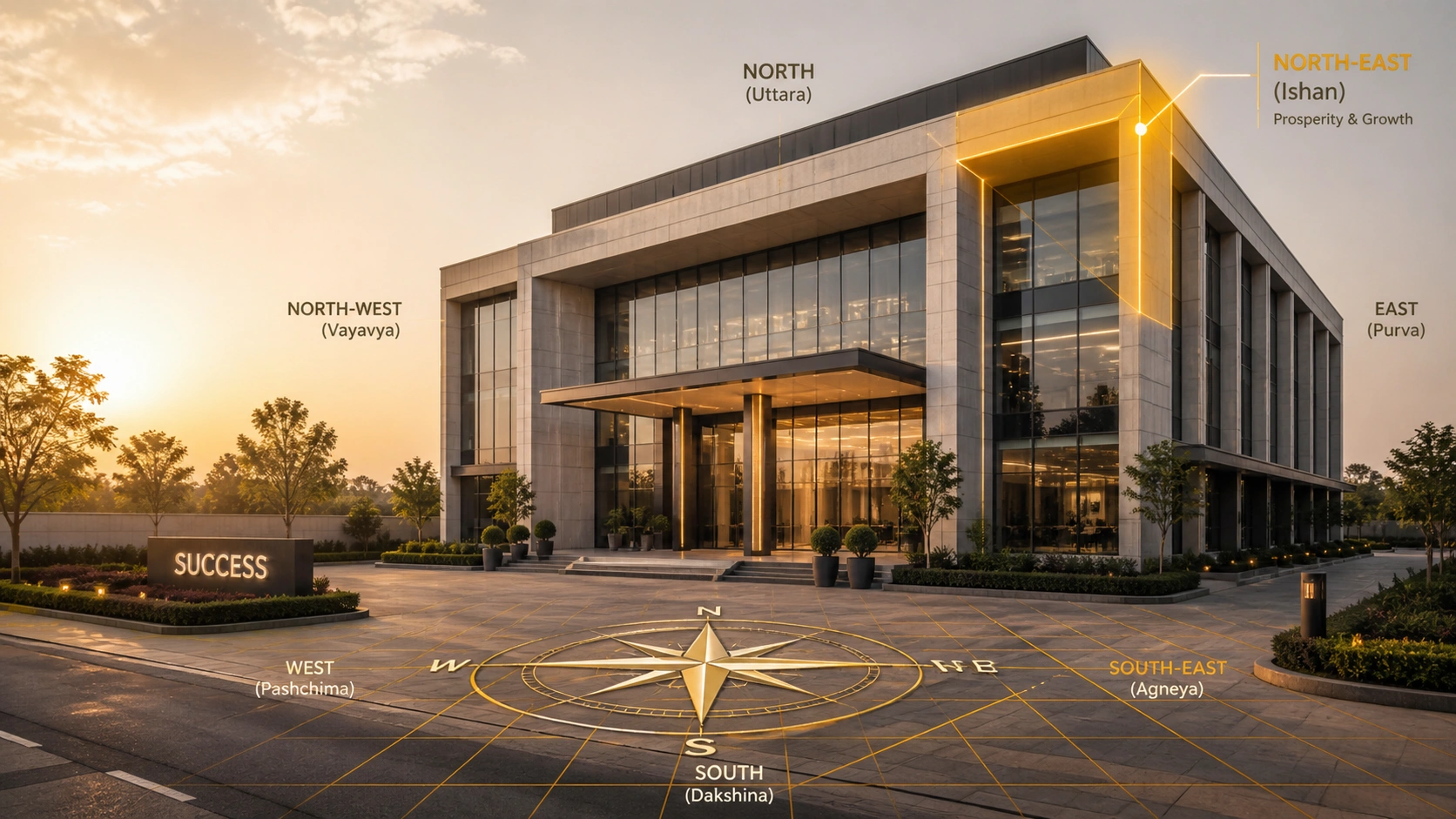
Modern building with compass and prosperity symbols

Use this image for an advanced 16-direction wheel so visitors understand the analysis system visually.

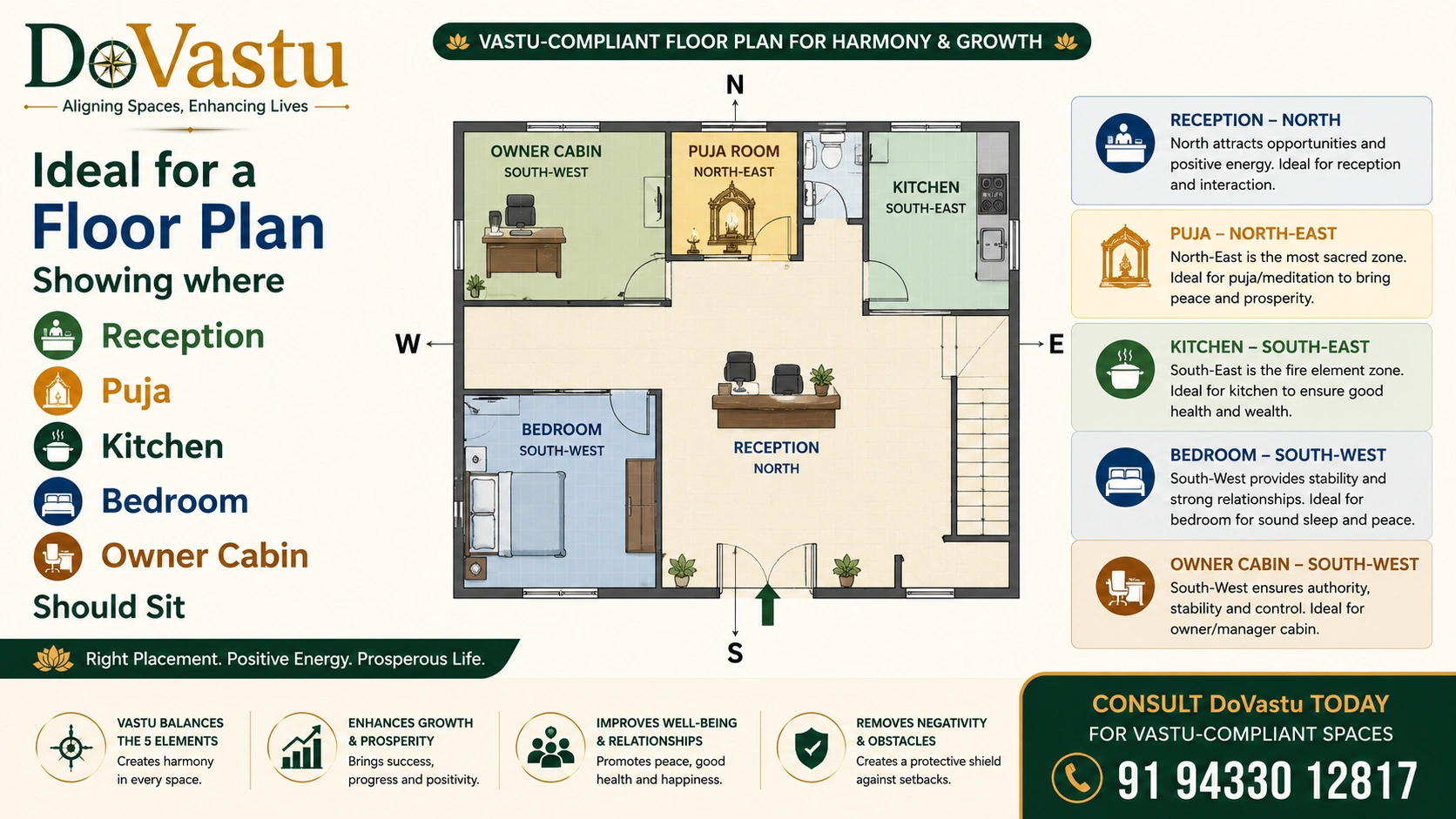
Vastu-compliant floor plan for harmony

Ideal for a floor plan showing where reception, puja, kitchen, bedroom, or owner cabin should sit.

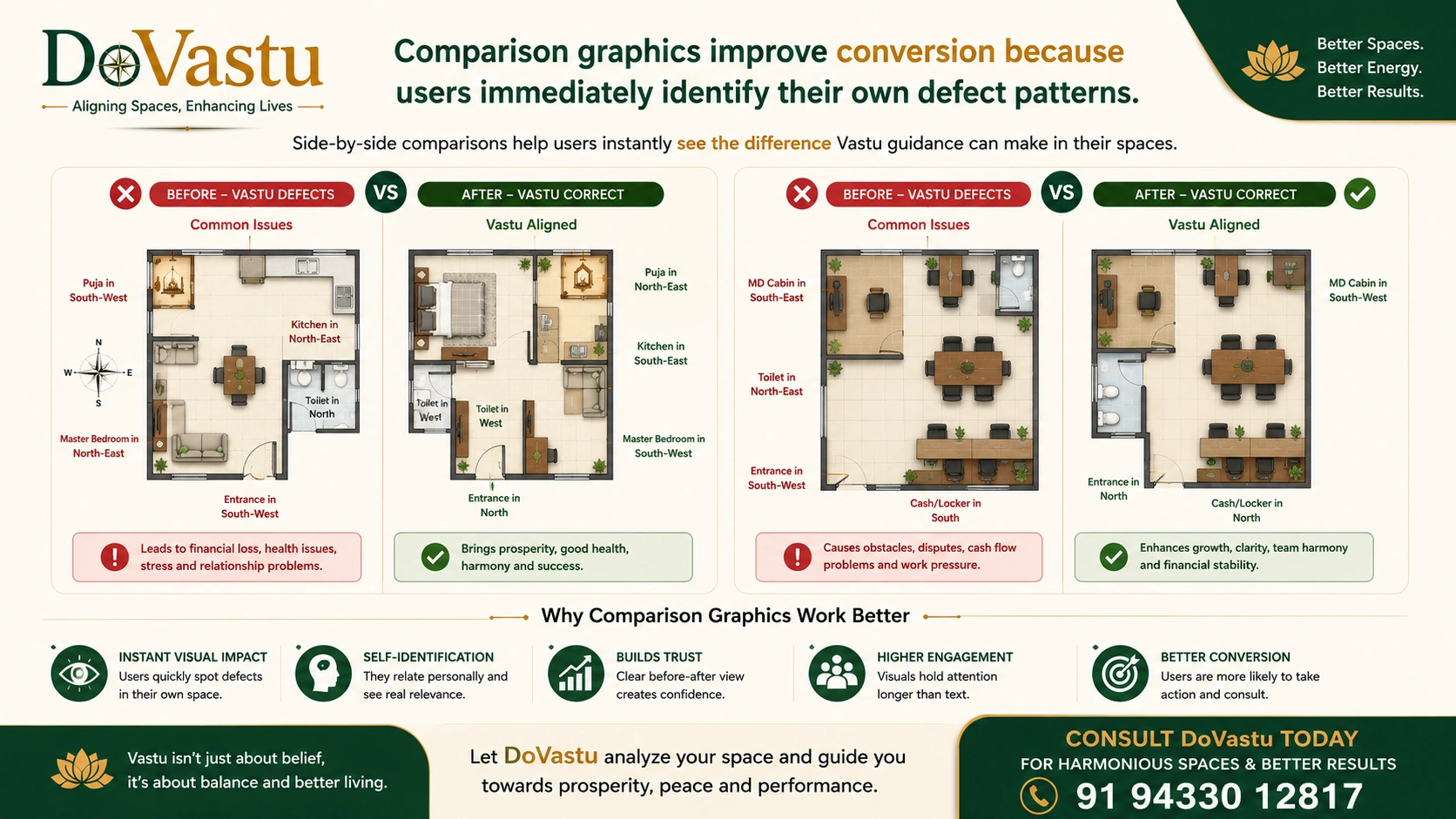
DoVastu floorplan comparison for better results

Comparison graphics improve conversion because users immediately identify their own defect patterns.

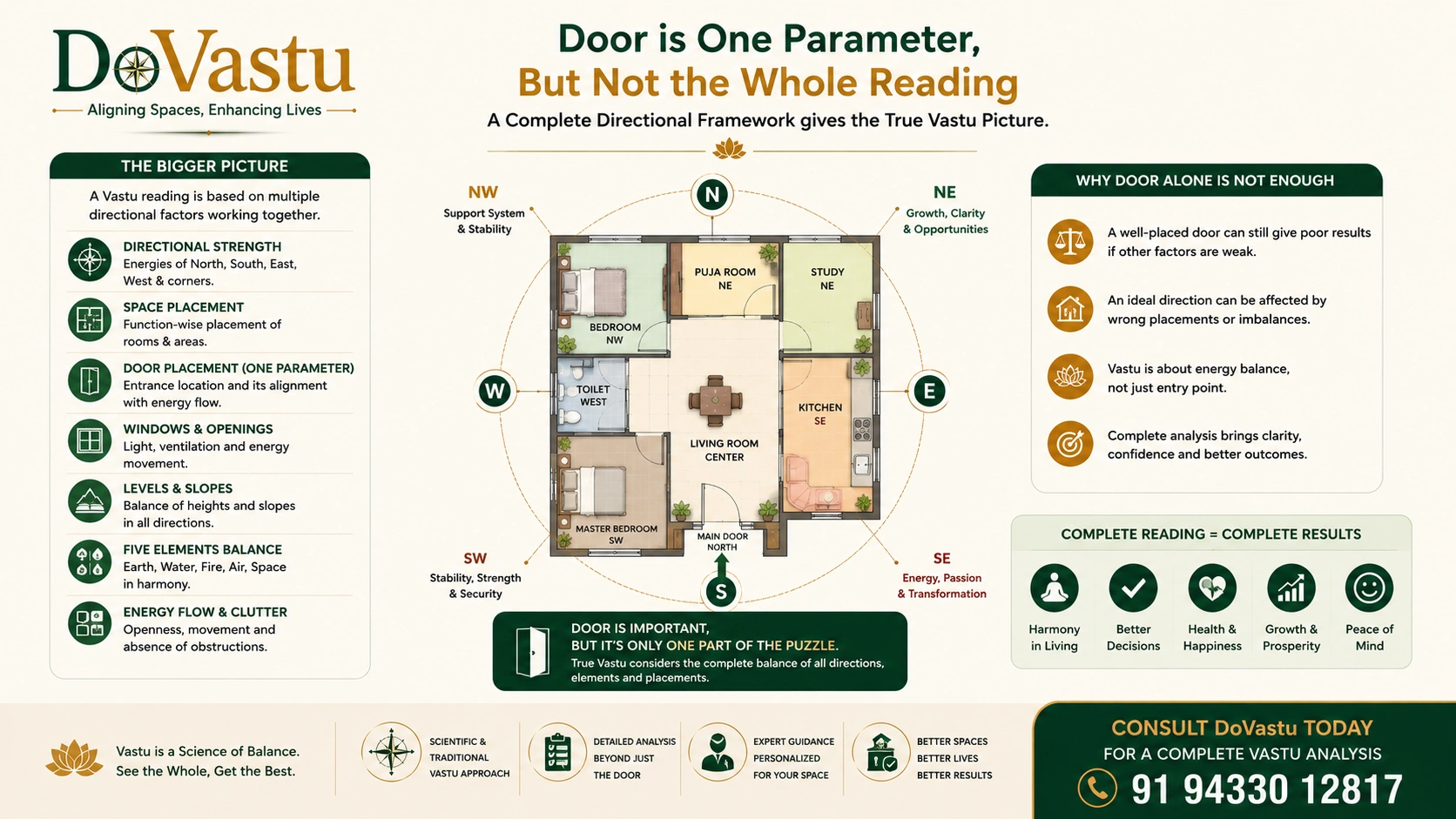
Complete Vastu analysis for better spaces

Show how door is one parameter, but not the whole reading, within the complete directional framework.

Complete 16 direction analysis

Functional Reading of All 16 Zones

Every zone below includes its energy, ideal use, door tendency where relevant, defect pattern, likely result, and practical example so theory can be connected to real-life property conditions.

1. North (Wealth Flow Zone)

North governs finance, opportunities, and inflow.

Energy

Finance, opportunities, inflow

Ideal Usage
  • Cash area
  • Reception
  • Open space
Door

North or NNE

DefectBlocked / heavy structure
ResultFinancial stagnation
Correction: Keep open, light
ExampleBlocked North in office → delayed payments
2. North-North-East (Opportunity Activation)

This zone helps expansion, openings, and future possibilities.

Energy

Expansion, new openings

Usage
  • Entry
  • Open zone
Door

Highly beneficial

DefectClutter
ResultMissed opportunities
ExampleBusiness not scaling despite effort

3. North-East (Clarity Zone)

North-East is linked with mind, clarity, guidance, and purity.

Energy

Mind, clarity, guidance

Usage
  • Puja
  • Meditation
Door

Excellent

DefectToilet, heavy storage
ResultConfusion, stress
ExampleWrong decisions in life

4. East-North-East (Planning Intelligence)

This zone supports strategic thinking, analysis, and learning.

Energy

Strategy, thinking

Usage
  • Study
  • Planning zone
Door

Good

DefectInactive zone
ResultPoor planning

5. East (Growth & Recognition)

East carries growth, visibility, recognition, and outward progress.

Energy

Growth, visibility

Usage
  • Living
  • Entrance
Door

East / ENE

DefectBlocked
ResultLack of recognition

6. East-South-East (Execution Zone)

This zone supports activity, effort, and implementation.

Energy

Activity, execution

Usage
  • Work zone
Door

Moderate

DefectOveractivation
ResultStress

7. South-East (Fire Zone)

The fire corner should support transformation, heat, power, and electrical use.

Energy

Fire, transformation

Usage
  • Kitchen
  • Electrical
Door

Avoid

DefectBedroom
ResultConflict, health issues

8. South-South-East (Aggressive Fire)

This sub-zone intensifies fire and can create aggression if misused.

Energy

Excess fire

Usage
  • Technical/electrical
Door

Avoid

ResultAggression, stress

9. South (Control Zone)

South gives discipline, control, weight, and authority.

Energy

Discipline, authority

Usage
  • Storage
Door

Not preferred

DefectOpen / light
ResultLack of control

10. South-South-West (Power Distortion)

This is an unstable control zone and should be handled carefully.

Energy

Unstable control

Usage
  • Heavy storage
Door

Avoid

ResultInsecurity

11. South-West (Stability Zone)

One of the most critical zones for grounding, control, and long-term stability.

Energy

Stability, grounding

Usage
  • Master bedroom
  • Owner cabin
Door

Never

DefectEmpty / light
ResultInstability
ExampleFrequent life changes

12. West-South-West (Delayed Growth)

This area can support slow stability but often delays result if misused.

Energy

Slow stability

Usage
  • Storage
Door

Avoid

ResultDelayed success

13. West (Result Zone)

West governs output, gain, and the visible result of effort.

Energy

Output, gains

Usage
  • Dining/work
Door

WNW

DefectOver-open
ResultPoor returns

14. West-North-West (Movement Growth)

This sub-zone supports dynamic growth, movement, and business expansion.

Energy

Dynamic growth

Usage
  • Sales / movement
Door

Good

ResultBusiness expansion

15. North-West (Relationship Zone)

North-West influences movement, relationships, and shifting interactions.

Energy

Movement, relationships

Usage
  • Guest room
Door

Moderate

DefectMaster bedroom
ResultInstability

16. North-North-West (Transition Zone)

This is a temporary, changing zone and usually does not support permanence.

Energy

Change

Usage
  • Temporary functions
Door

Avoid

ResultFrequent changes
Visual connection

Use Real Layouts to Connect Theory with Property Design

These additional 4 placeholders are positioned after the full directional reading so visitors can relate the 16-zone logic with actual plans, diagrams, and corrected layouts.

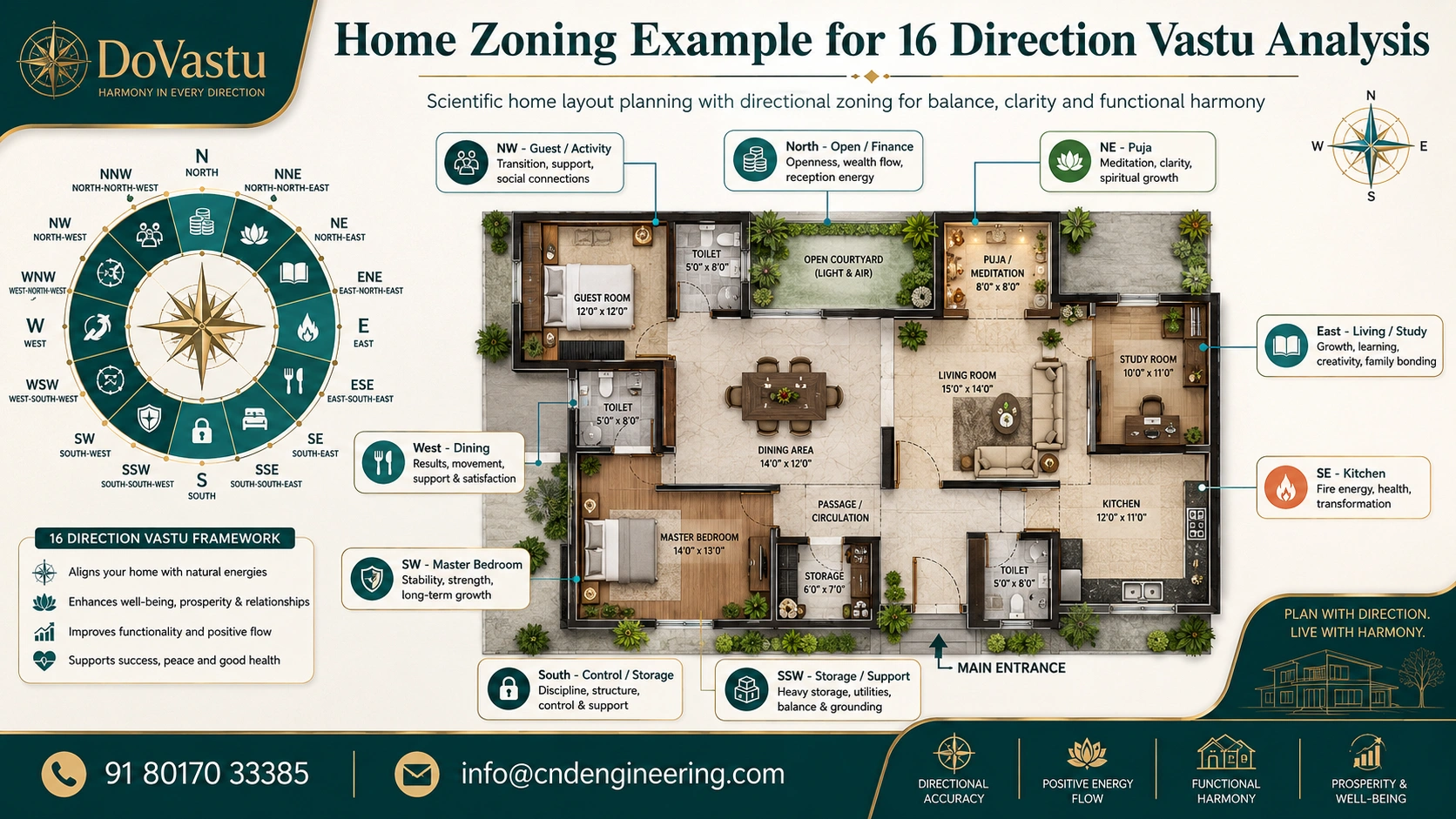
Image Placeholder 5Upload Home Zoning Example Image Placeholder 5Upload Home Zoning Example

A home plan showing puja, bedroom, kitchen, and open zones mapped against 16 directional divisions.

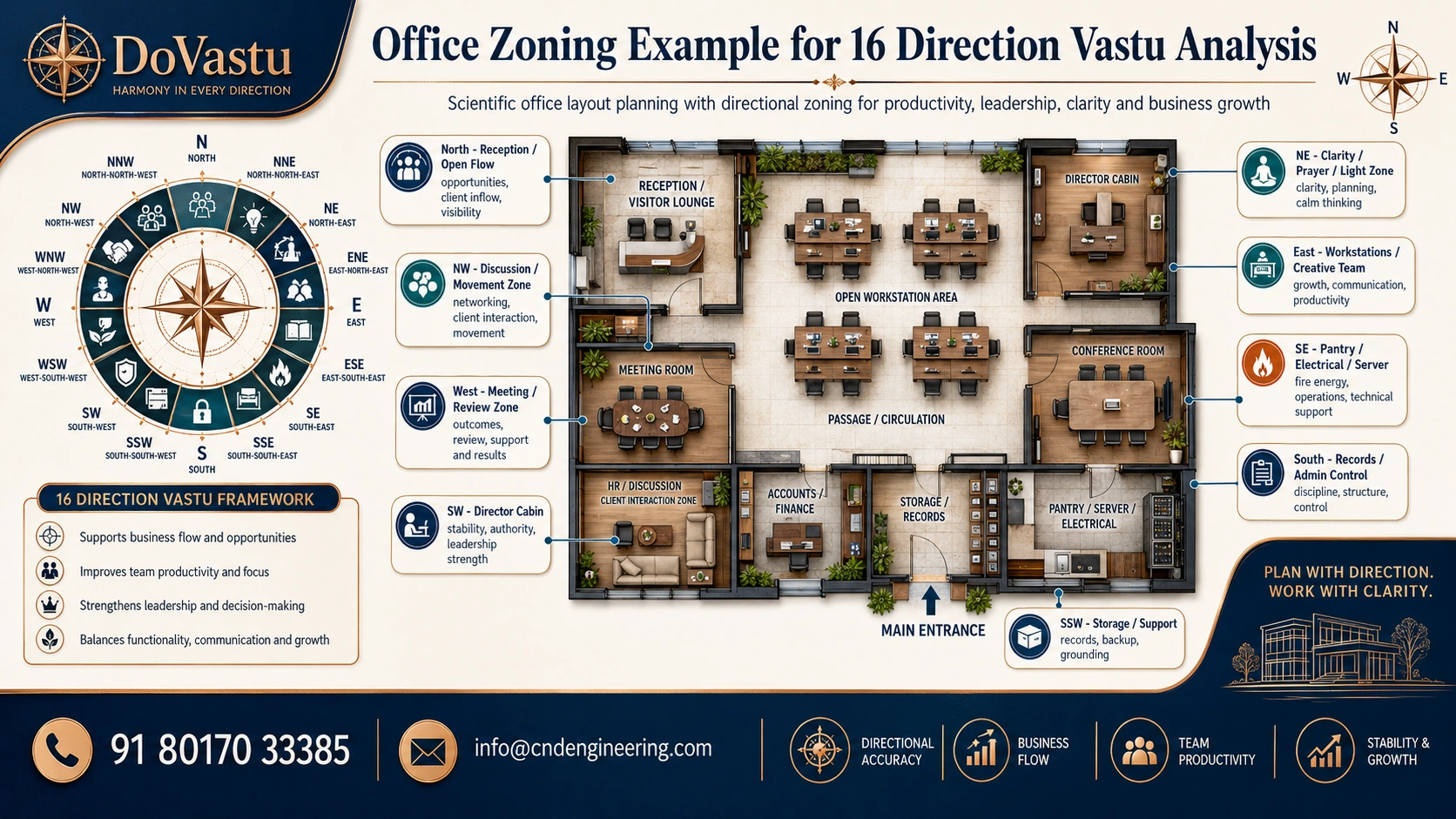
Image Placeholder 6Upload Office Zoning Example Image Placeholder 6Upload Office Zoning Example

Best for showing owner seating, reception, finance, and staff zones according to directional function.

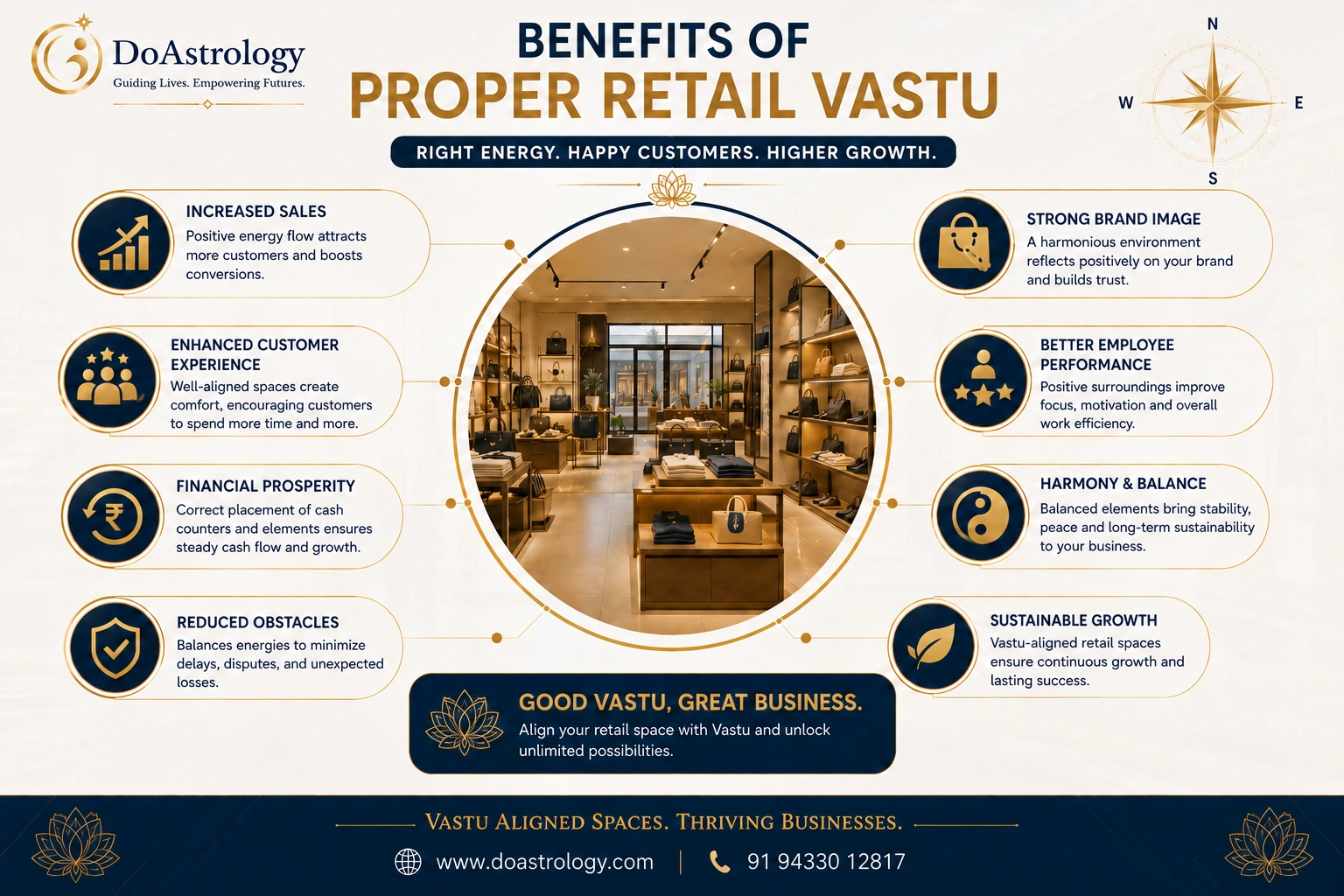
Image Placeholder 7Upload Retail Flow Example Image Placeholder 7Upload Retail Flow Example

Use this for a retail layout showing entry, display, cash flow, and customer movement corrections.

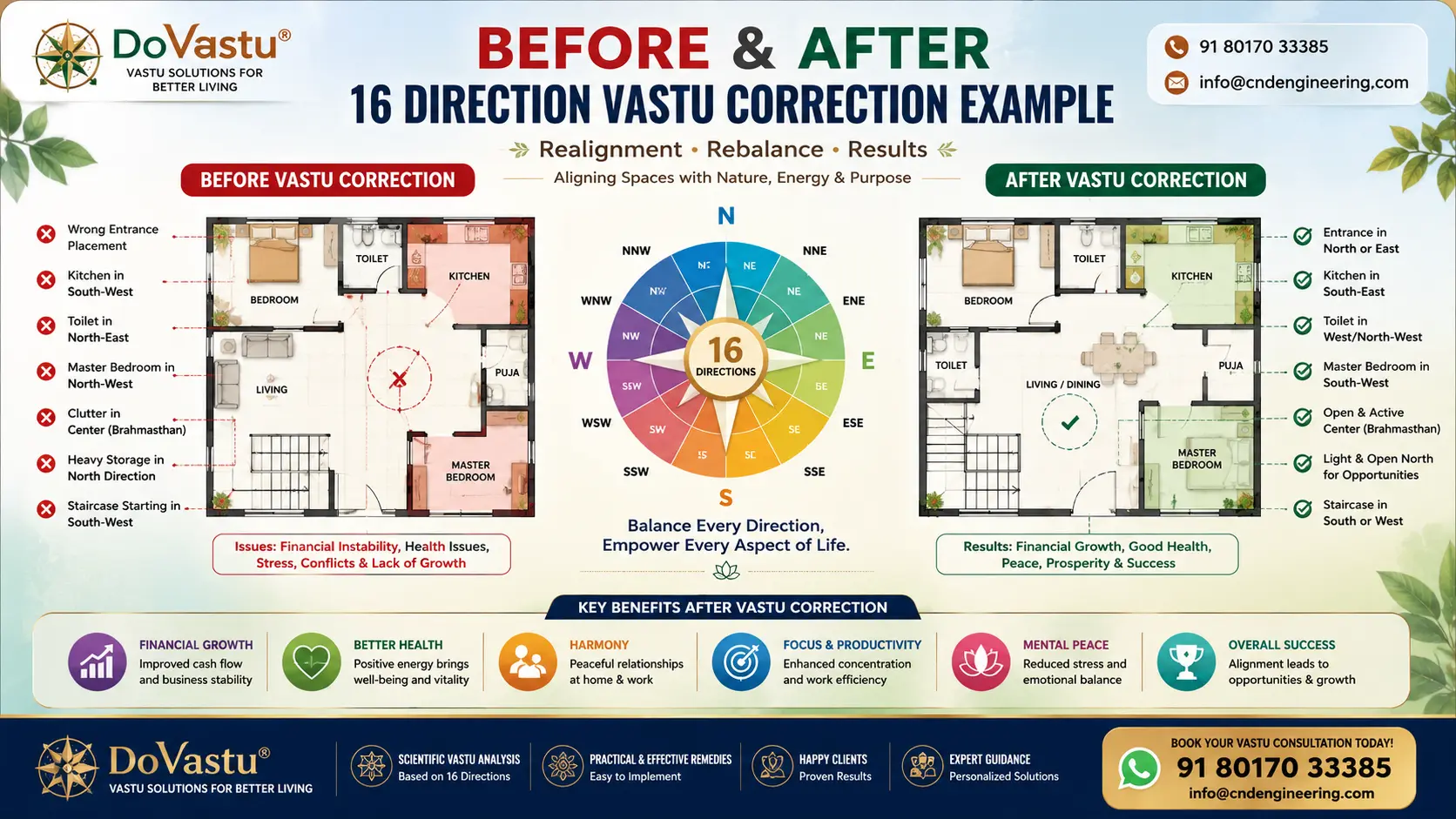
Image Placeholder 8Upload Before / After Correction Image Placeholder 8Upload Before / After Correction

A before-after layout comparison helps the viewer immediately connect diagnosis with solution.

Case analysis

Practical Case Analysis (Integrated)

These examples show how multiple defects combine to create outcome patterns, and why total analysis is necessary.

Residential Case

Issues: NE toilet
Issues: SW weak
Issues: Wrong door
Result: Stress + instability
Correction: Balance zones + adjust usage
Outcome: Stability + clarity

Office Case

Issues: Owner in NW
Issues: Finance misplaced
Issues: Door wrong
Result: Poor decisions
Correction: SW seating + North finance
Outcome: Strong control

Retail Case

Issues: Wrong entry
Issues: Poor display zone
Result: Low conversion
Correction: Align direction + flow
Outcome: Increased sales
Methodology

Our Complete 16-Direction Vastu Process

Every property is reviewed through a structured method so the analysis stays measurable, logical, and implementable.

1

Direction Measurement

Degree accurate directional verification forms the base of the analysis.

2

Layout Preparation

We prepare or reconstruct the plan in usable form for proper zoning.

3

16-Zone Mapping

The property is divided into 16 directional sectors for detailed reading.

4

Functional Alignment

Every room or activity is checked against the energy of the zone it occupies.

5

Door Evaluation

Entry is studied as one important parameter within the total system.

6

Practical Correction

We recommend realistic changes that improve the space without unnecessary disruption.

Benefits

Benefits of Complete Directional Alignment

When totality is considered instead of partial rules, the correction becomes more reliable and outcome-focused.

Financial stability
Better decisions
Strong relationships
Business growth
Mental clarity
Final clarity

Why Partial Vastu Fails — and Why DoVastu Works

Why Partial Vastu Fails

Only door. Only direction. No layout analysis. Result: incomplete solution.

Why DoVastu Works

Complete system, scientific method, practical correction, real-life results.

Final Conclusion

Direction = Energy. Function = Utilization. Door = Entry. All must align.

Call to Action

Book Complete 16 Direction Vastu Analysis. Get a scientific, practical, and result-oriented solution.

If you want next step: this can be extended into premium visual landing page with diagrams and visual grids.

Start Your 16-Direction Property Analysis

Get a complete, visually explainable, and scientifically structured Vastu review for your home, office, retail outlet, or other property.

  • Entire document content integrated into one page
  • Exact reference header and footer retained unchanged
  • CSS embedded directly inside the HTML file
  • 8 image placeholders placed at appropriate visual points
  • Premium internal design for stronger visitor engagement